

I've been testing serums on my combo, breakout-prone skin for years, and vitamin C is the one ingredient that keeps earning its spot in my morning routine. Not because the marketing is convincing but because the mechanism is real. The problem is most bottles sell the concept and skip the chemistry. If the formula is wrong, pH is off, or the vitamin C has already oxidized to a muddy orange, you're paying for nothing. Here are the 10 reasons a well-formulated vitamin C serum actually brightens skin, and what TruSkin Vitamin C Serum does to hit those marks.
These aren't marketing claims. Each reason ties directly to a specific mechanism in the formula. If a serum can't support these ten things, the brightening claims on the box are wishful thinking.
If your current vitamin C serum has turned orange, your skin isn't getting any of these benefits.
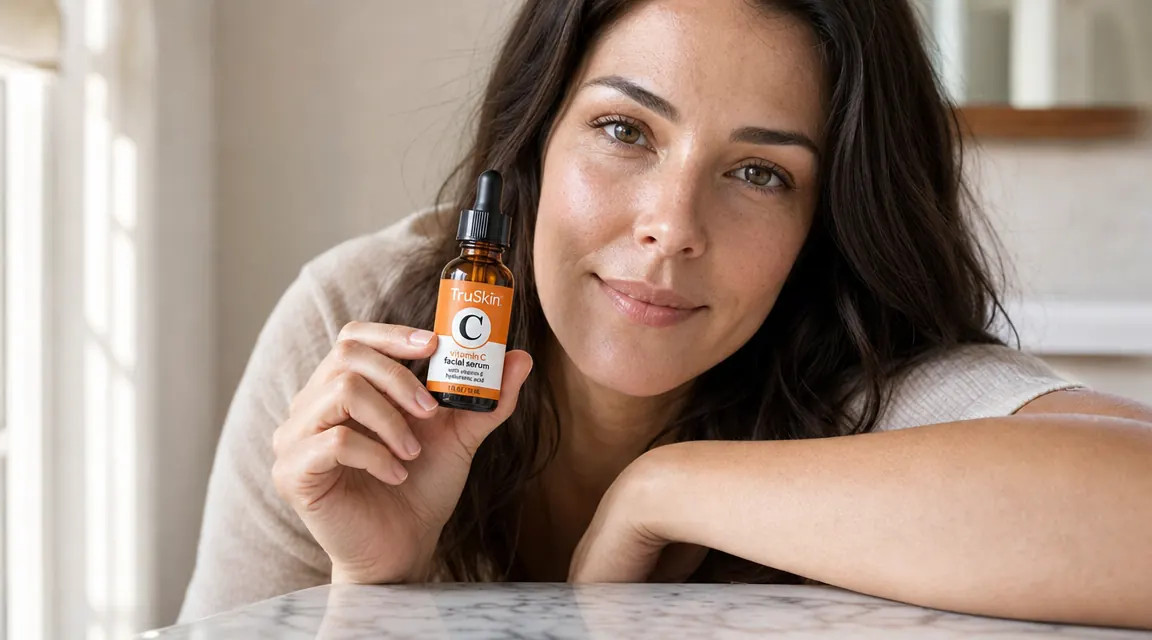
TruSkin Vitamin C Serum combines L-ascorbic acid with vitamin E and hyaluronic acid in a stabilized formula. Over 155,000 Amazon reviews, 4.4 stars.
Amazon Check Today's Price on Amazon →It Blocks the Enzyme That Creates Pigment in the First Place
A vitamin C serum works upstream of hyperpigmentation by inhibiting tyrosinase, the enzyme that converts tyrosine into melanin. Less tyrosinase activity means less pigment gets produced at the source. This is why consistent morning use matters more than a single heavy application. You're not fading spots after the fact. You're preventing new ones from forming.
It Interrupts Melanin Transfer to Skin Cells
Pigment doesn't just form, it has to move from melanocytes into keratinocytes to become visible. A vitamin C serum can interrupt this transfer step, which means even when some melanin is produced, less of it surfaces as a visible dark spot. This second mechanism is part of why the ingredient can visibly even skin tone even on older discoloration.
It Scavenges Free Radicals That Would Otherwise Cause UV Discoloration
Free radicals from UV exposure and pollution trigger oxidative stress, which accelerates melanin production and breaks down collagen. A vitamin C serum donates electrons to neutralize those free radicals before they can trigger a pigment cascade. This is why layering vitamin C under SPF is more protective than SPF alone. TruSkin pairs the vitamin C with vitamin E, which amplifies this antioxidant effect significantly.
It Supports Collagen Synthesis for Plumper, More Reflective Skin
Ascorbic acid is a required cofactor for the enzymes that synthesize collagen. Without adequate vitamin C, those enzymes can't hydroxylate proline and lysine into stable collagen chains. A vitamin C serum applied consistently helps maintain the structural collagen density that makes skin reflect light evenly rather than look flat and textured.
It Reduces the Look of Post-Inflammatory Hyperpigmentation from Breakouts
For anyone with combo or acne-prone skin, post-inflammatory hyperpigmentation (PIH) is the long tail of every breakout. A vitamin C serum addresses PIH through both the tyrosinase inhibition path and the melanin transfer path. The catch is that it works slowly. Expect six to eight weeks before spots measurably lighten. That's not a failure of the ingredient, that's just skin cell turnover math.
It Works Best at a pH Between 2.5 and 3.5, and Most Formulas Don't Bother
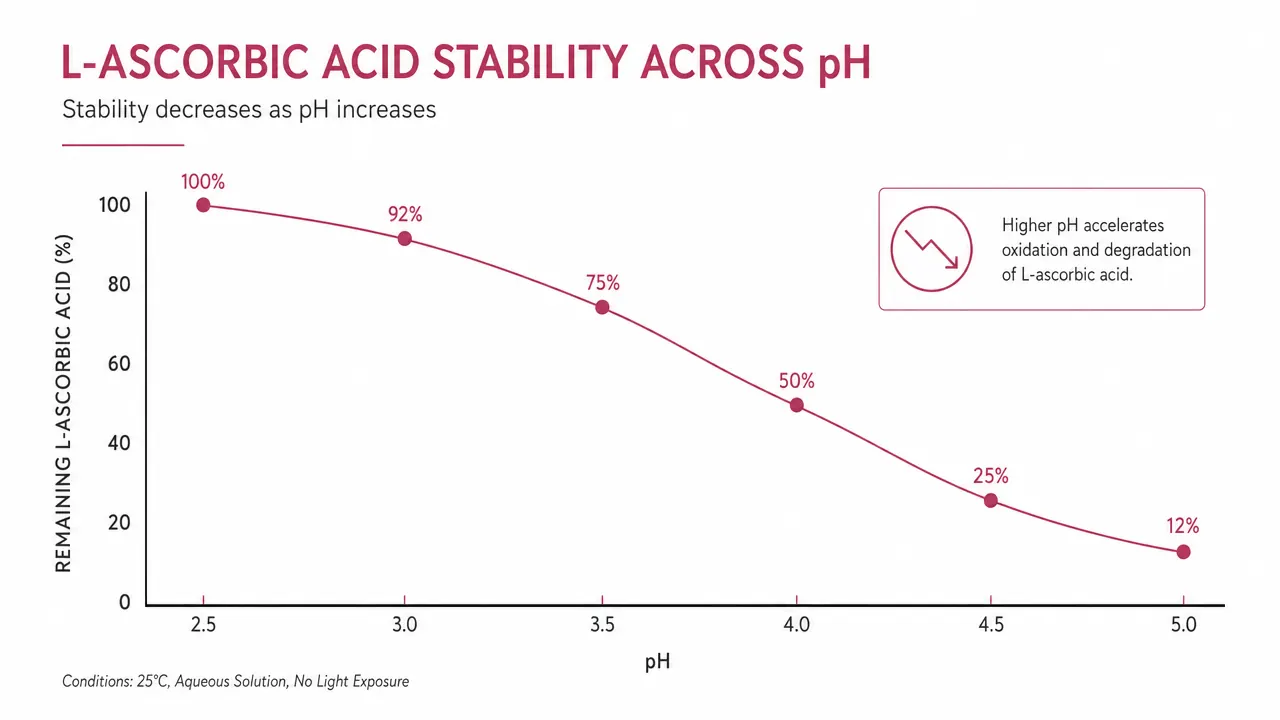
L-ascorbic acid needs an acidic pH to penetrate the skin barrier. At pH above 4, absorption drops sharply and the ingredient starts to lose efficacy. A vitamin C serum with the wrong pH isn't just weak, it's mostly inert. TruSkin's formula is pH-adjusted to sit within the effective range, which is more than you can say for most drugstore vitamin C products that list ascorbic acid but don't tune the formula to match.
It Evens Skin Tone by Addressing Sun-Triggered Hyperpigmentation Directly
Chronic sun exposure causes diffuse tanning and focal dark spots via accumulated UV-triggered melanin. A vitamin C serum applied before sun exposure helps reduce how much new pigment forms in response to UV stress. Applied after exposure, it can't reverse the UV that already hit your DNA, but it can reduce the oxidative cascade that follows. Morning application is the more useful window.

It Pairs with Hyaluronic Acid to Deliver Hydration Without Competing for It
Dehydrated skin looks dull regardless of melanin. A vitamin C serum that includes hyaluronic acid in the formula addresses both texture and tone in a single step. TruSkin includes HA specifically so that the slight low-pH sting of the L-ascorbic acid doesn't leave skin stripped. For combo and dry skin types, this pairing makes daily use far more sustainable than a straight-acid serum.
It Has Decades of Published Safety Data on Non-Sensitized Skin
Some brightening actives, kojic acid, azelaic acid, hydroquinone, have more application restrictions or sensitization potential. A vitamin C serum using L-ascorbic acid at 15 to 20% is one of the most studied topical antioxidants in dermatology. It's appropriate for daily use on non-sensitized skin without the cycling or restriction windows that come with retinol or exfoliating acids.
A Vitamin C Serum in an Amber Bottle Is Less Likely to Oxidize Before You Finish It
Ascorbic acid oxidizes on contact with air and light, turning the serum orange and converting the active into dehydroascorbic acid, which has no brightening benefit. A vitamin C serum packaged in opaque or amber glass, stored away from heat, extends the active life of the formula. TruSkin ships in a dark glass bottle with a dropper seal for this exact reason. If your current serum is bright yellow-orange and smells slightly off, it's already degraded.
What I'd Skip
Vitamin C powders that you mix into moisturizer at home sound appealing because you control oxidation. In practice, getting the pH right without a proper buffer is nearly impossible and most home-mix results are either too weak or too irritating. I'd also skip any serum that lists sodium ascorbyl phosphate or magnesium ascorbyl phosphate as the primary form without transparency about percentage. Those derivatives are more stable but require higher concentrations to match L-ascorbic acid efficacy, and most budget formulas underdose them. If the label says 'vitamin C' but doesn't say what form or percentage, that's a red flag.
The formula matters more than the marketing. An oxidized vitamin C serum with the wrong pH isn't a brightening treatment. It's expensive orange water.
If you want to go deeper on how TruSkin specifically holds up over four months of real use, I wrote a full breakdown in my long-term TruSkin Vitamin C Serum review. And if you want the full ingredient-level analysis before you buy, the honest review with formula breakdown covers every ingredient in the panel.
All 10 mechanisms require a formula that's still active when it reaches your skin.
TruSkin Vitamin C Serum is stabilized, pH-adjusted, and paired with vitamin E and hyaluronic acid. It's the version I reach for on my combo skin every morning. 155,000+ reviews, currently available on Amazon.
Amazon Check Today's Price on Amazon →