
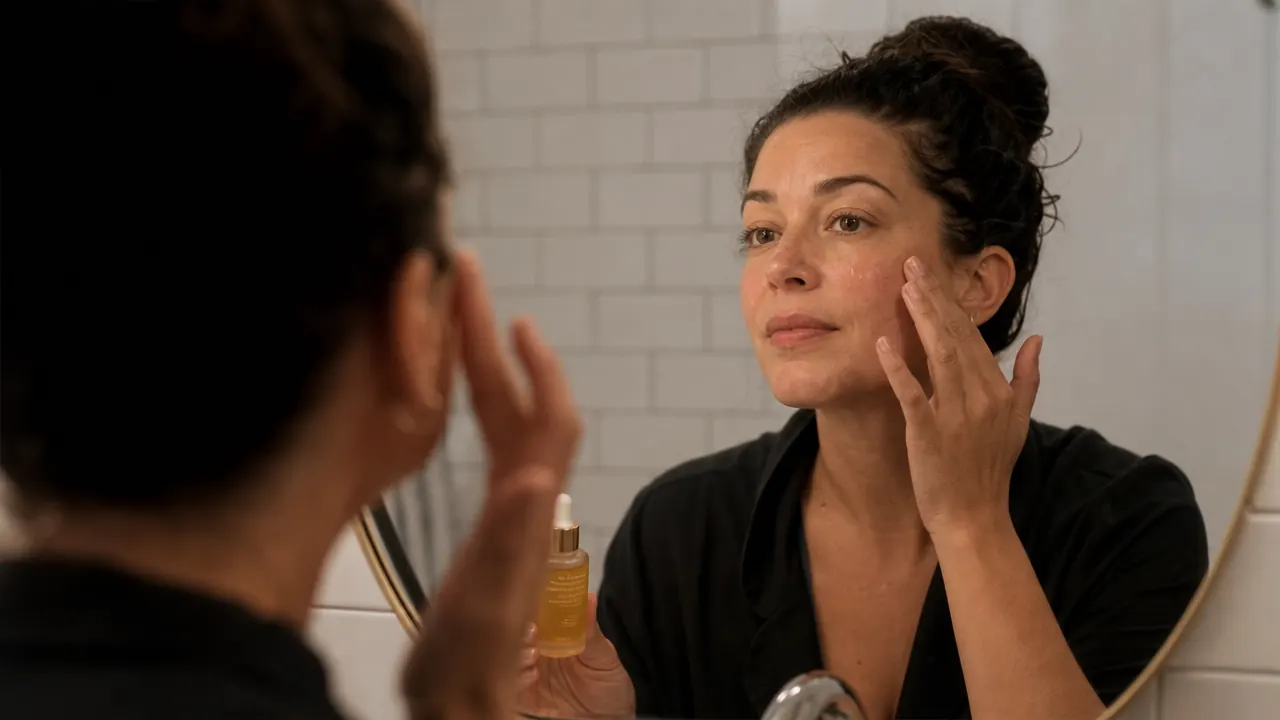
I have a folder on my phone called "before shots" that I started in January 2026. It has 47 photos of my left cheekbone. That is the kind of person I am when I'm testing a serum. I'm Jenna Hart, and I have been writing about skincare ingredients for six years with combo, dehydrated, breakout-prone skin that has taught me to distrust packaging claims and trust the ingredient panel. So when TruSkin Vitamin C Serum kept appearing in my inbox, on Reddit's SkincareAddiction, and in my DMs from readers with similar skin types, I bought a bottle and put it on a four-month testing calendar. What follows is what I actually found.
The short version: TruSkin Vitamin C Serum is a legitimate brightening serum with a formula that makes real trade-offs. The vitamin C derivative it uses is less potent than L-ascorbic acid but significantly more stable and less likely to oxidize in your medicine cabinet. That choice affects both the results timeline and who benefits most. After four months, my post-breakout hyperpigmentation faded noticeably, my skin tone evened out, and my morning routine took on a subtle luminosity I can only describe as "awake-looking." It did not erase my fine lines. It did not close my pores. The cons are real, and I'll walk through all of them.
The Quick Verdict
A stable, beginner-friendly vitamin C serum that delivers genuine brightening over 8-12 weeks, with a gentler ingredient trade-off that makes it more realistic for everyday use than many L-ascorbic acid formulas.
Amazon Check Today's Price →Four months of testing convinced me. Check the current price before the next review does.
TruSkin Vitamin C Serum has 155,000+ Amazon reviews and a 4.4 rating. It's priced for daily use and ships Prime. If brightening and hyperpigmentation reduction are your goals, this is the most realistic entry point in this price range.
Amazon Check Today's Price on Amazon →How I've Used It: The Testing Protocol
I applied TruSkin Vitamin C Serum every morning for 16 weeks straight, starting January 3, 2026. My routine during this period was stripped back deliberately: gentle low-pH cleanser, TruSkin serum (3-4 drops, pressed into damp skin), a ceramide moisturizer, and EltaMD UV Clear SPF 46. No additional actives in the morning. No exfoliating acids. No second vitamin C product. I have breakout-prone, dehydrated combination skin with a T-zone that stays oily by noon, dry patches along my jawline and forehead that tighten after cleansing, and about eight years of sun damage concentrated on my left cheekbone from driving. Those before photos matter here: they gave me an honest baseline to measure against.
I did not add anything to my morning routine until week six, when I noticed my skin had adapted well and no irritation had appeared. At that point I continued with the same stripped-back routine to isolate the serum's contribution. I photographed my left cheekbone under the same natural light, same position, every 14 days. I kept notes on texture, how my skin behaved under makeup, and whether breakouts changed in frequency or healing speed.
One important caveat before I describe results: SPF is doing heavy lifting here. Any brightening serum works faster and more reliably when you are protecting the progress you make every single morning. I am religious about SPF and have been for three years. If you skip sunscreen, your vitamin C serum will be fighting an uphill battle every day you go outside.
The Ingredient Story: Why Sodium Ascorbyl Phosphate Instead of L-Ascorbic Acid
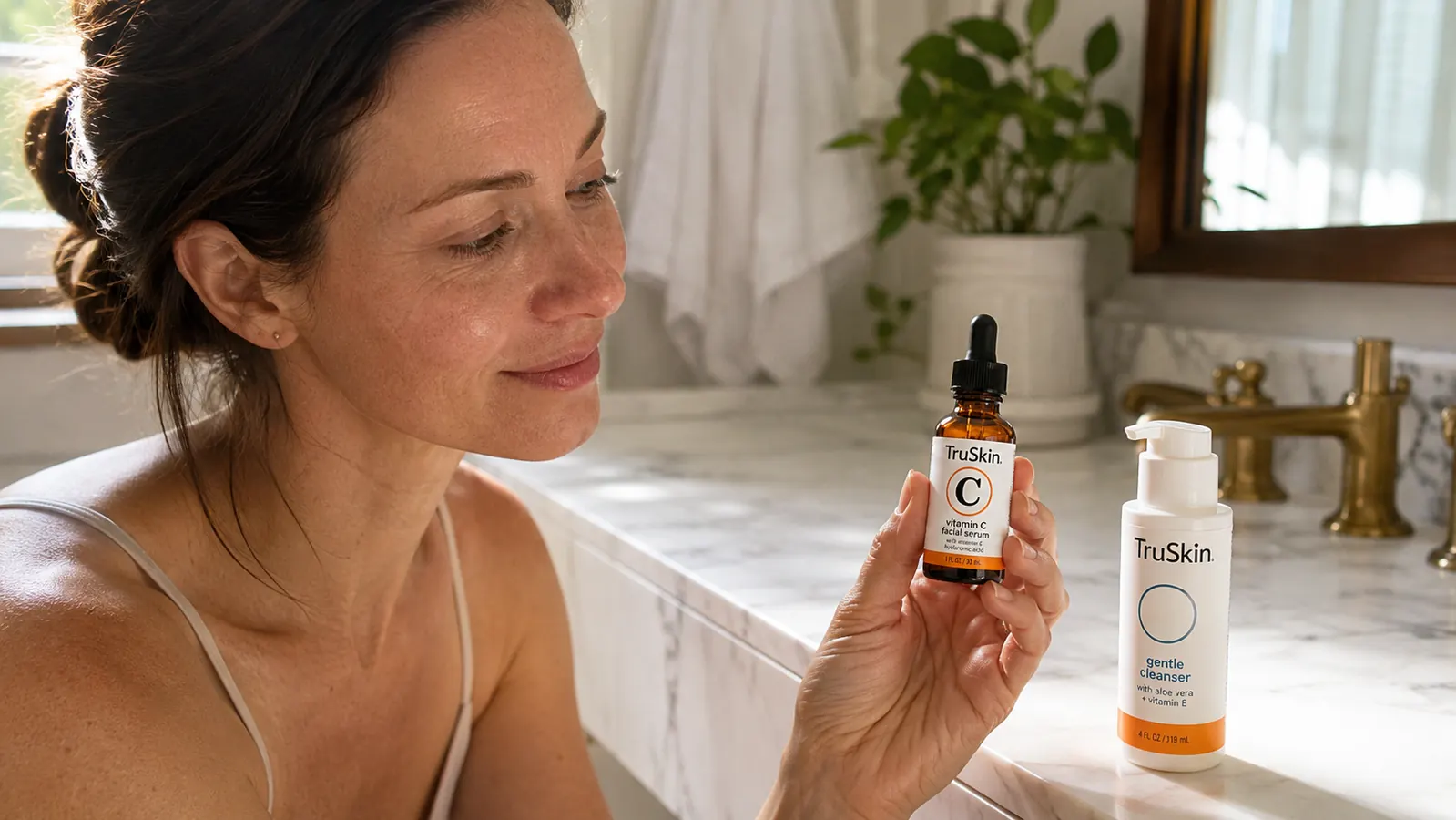
This is the most important thing to understand about TruSkin's formula. The vitamin C in this serum is sodium ascorbyl phosphate (SAP), not the clinical gold standard L-ascorbic acid (LAA). That matters because these two derivatives behave very differently on the skin.
L-ascorbic acid at 10-20% concentration is the most researched form of vitamin C for skin, with strong evidence for collagen synthesis stimulation and melanin inhibition. But LAA is notoriously unstable. It oxidizes when exposed to light, heat, and air, turning the serum from clear or pale yellow to orange or brown. Once oxidized, it loses efficacy and can actually cause free radical damage instead of preventing it. Many people crack open an LAA serum, use it for two months, and finish a product that has degraded significantly by bottle two. Sodium ascorbyl phosphate is a phosphate ester of vitamin C. It is substantially more stable, less likely to irritate skin at equivalent use concentrations, and converts to active ascorbic acid on the skin surface, though at lower conversion rates than direct LAA application. The clinical evidence for SAP is thinner than for LAA but it exists, particularly for post-inflammatory hyperpigmentation and mild brightening.
TruSkin pairs SAP with vitamin E (tocopherol) and ferulic acid, which is the same antioxidant synergy that makes SkinCeuticals C E Ferulic so well-regarded. That trio stabilizes each component and extends antioxidant activity. The formula also contains hyaluronic acid, which is largely a texture and hydration play rather than a brightening ingredient, but it is why this serum feels comfortable on dehydrated skin. The botanical brighteners in the formula (aloe vera, jojoba oil) are window dressing at these concentrations. I would not buy this serum for those ingredients. I would buy it for the SAP plus E plus ferulic core.
What Actually Changed After Four Months
By week four, nothing dramatic happened. This is accurate and not a complaint. SAP-based serums take longer to show results than high-concentration LAA, and anyone who tells you a vitamin C serum will transform your skin in two weeks is either lying or selling you something.
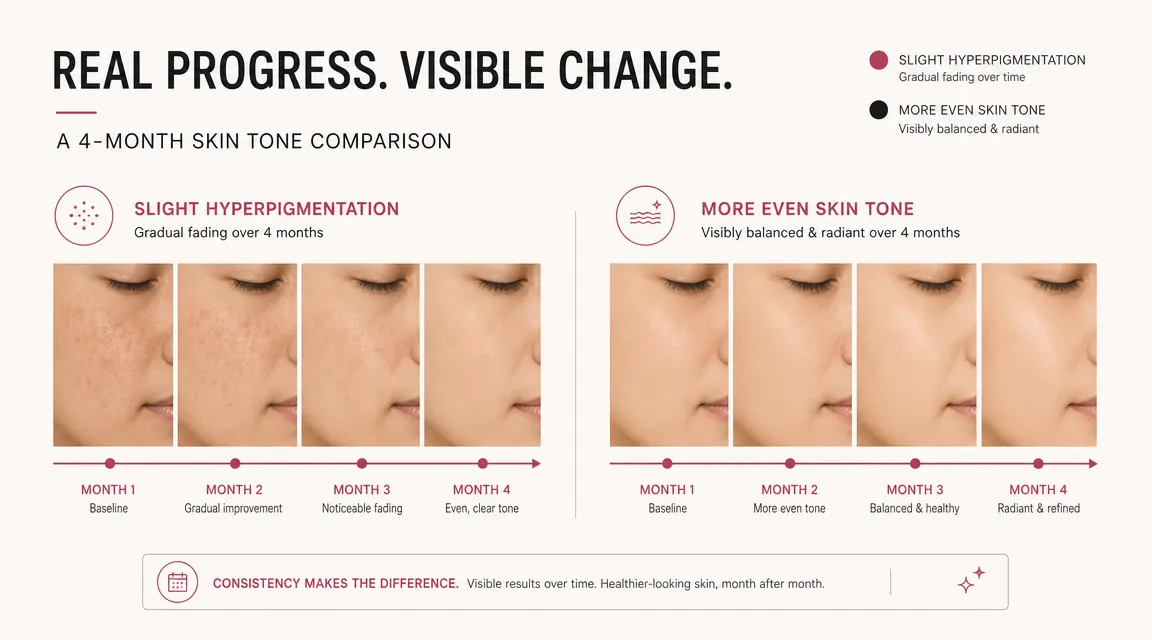
By week eight, the post-breakout marks on my chin and along my jawline were fading faster than they had before I started the serum. I typically hold onto hyperpigmentation for three to four months per spot. During this test period, I tracked two new breakout spots and both faded in approximately six weeks. That improvement is meaningful to me.
By week twelve, the sun damage patch on my left cheekbone was noticeably lighter. Not gone. Lighter. I would estimate 30-40% improvement in contrast between the spot and the surrounding skin. When I compared my before photo to the week-twelve photo under the same light, the difference was visible enough that my partner commented without prompting. That is the kind of result I find credible.
Post-breakout marks that used to linger for three or four months were fading in six weeks. That is the result I was testing for, and that is what I got.
By week sixteen, my overall skin tone had evened out. The baseline difference between my T-zone color and my drier cheek zones was less pronounced. My skin looked, consistently, more even and what I can only describe as lit from within on good skin days. I still had dull days when I was tired or dehydrated. The serum is not a substitute for sleep.
The Texture and Application Experience
TruSkin Vitamin C Serum has a slightly golden, watery serum texture. It absorbs within about 30 seconds on my skin and leaves no sticky residue. Three to four drops covers my full face and neck. It layers cleanly under a moisturizer without pilling.
I applied it to slightly damp skin, which is my personal preference for water-soluble serums as it helps distribute the product and gives hyaluronic acid something to bond to. The scent is mild and herbal, faintly botanical, not perfumed. It did not cause any tingling, redness, or purging on my skin. I had zero breakout response in the first two weeks, which is notably different from my experience with higher-concentration LAA serums, which have historically caused minor purging on my chin.
The dropper dispenses consistently and the dark glass bottle is appropriate for a formula containing oxidation-prone ingredients. Keep it away from your windowsill.
Alternatives I Considered
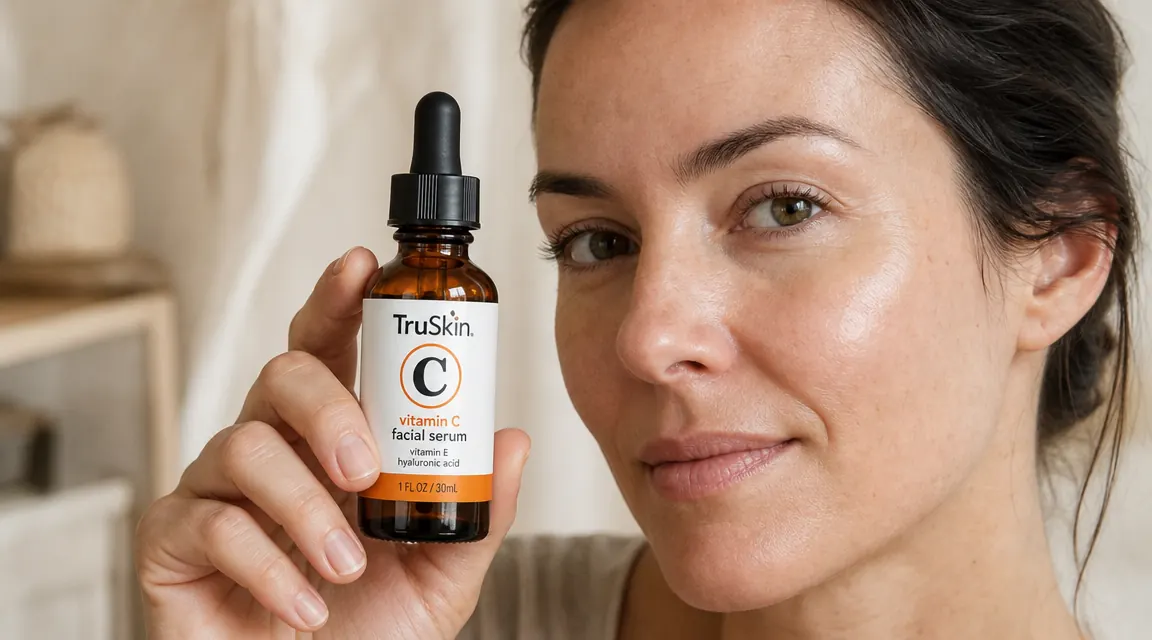
I tested TruSkin alongside notes from my previous use of two other vitamin C serums. The Ordinary's Ascorbic Acid 8% + Alpha Arbutin 2% is a lower-concentration LAA serum at a fraction of the price. It works, but the texture is thin to the point of feeling like water, and it oxidized noticeably around week ten of my bottle. For anyone curious about how TruSkin stacks up against the SkinCeuticals C E Ferulic, which runs nearly five times the price, I went into full detail in my TruSkin vs SkinCeuticals C E Ferulic comparison. The short answer: TruSkin closes more of the gap than the price difference implies, but SkinCeuticals is still the cleaner, higher-potency formula for anyone with the budget.
Paula's Choice C15 Super Booster uses 15% LAA and is excellent but runs at a premium price and does oxidize. If stability and budget are your primary concerns, TruSkin is a more practical choice. If you want max potency and are committed to using the whole bottle quickly, the higher-concentration LAA options are worth considering. If you want to understand why vitamin C serums brighten skin at the molecular level, I wrote a full breakdown in 10 reasons vitamin C serum brightens skin.
What I Liked
- Sodium ascorbyl phosphate is more stable than L-ascorbic acid, less oxidation risk over a multi-month bottle
- Vitamin E and ferulic acid synergy extends antioxidant protection
- Hyaluronic acid base is comfortable on dehydrated and combo skin
- No tingling or purging response on breakout-prone skin in my four-month test
- Consistent dropper, dark glass bottle, appropriate packaging for light-sensitive actives
- 155,000+ Amazon reviews provides broad real-world signal across skin types
- Post-breakout hyperpigmentation faded meaningfully faster than my baseline
Where It Falls Short
- SAP is less potent than L-ascorbic acid, results take longer, typically 8-12 weeks before visible brightening
- Botanical brighteners (aloe, jojoba) add minimal evidence-backed brightening contribution at these concentrations
- Does not significantly address fine lines or wrinkles, that is not what vitamin C derivatives do best at this concentration
- Slight herbal scent may bother fragrance-sensitive users, though it is mild
- Hyaluronic acid requires damp skin for best results, the instructions should say this more clearly

Who This Is For
TruSkin Vitamin C Serum is the right choice if you are new to vitamin C serums and do not want the higher oxidation risk or potential irritation of a high-concentration L-ascorbic acid product. It is well-suited for combo and dehydrated skin types, for anyone focused on post-inflammatory hyperpigmentation from breakouts, and for anyone who has opened a vitamin C serum before and watched it turn orange before finishing the bottle. At this price point, the SAP formula makes it one of the more practical daily-use vitamin C options in the market. If your primary goal is brightening and more even skin tone over a realistic 12-16 week timeline, this serum delivers.
Who Should Skip It
If you want the fastest possible brightening results and are not prone to irritation, a high-concentration L-ascorbic acid serum (10-20% range) is more potent. If you have fully resilient skin without breakout tendencies, the stability trade-off TruSkin makes is less valuable to you. If you are treating deep, established melasma or significant photo-aging, a vitamin C serum alone will not be enough regardless of the formula, and you would be better served by a combination approach including azelaic acid or a prescription-grade brightener. And if you are expecting this serum to address fine lines as its primary function, manage expectations. Vitamin C protects against further UV-induced collagen breakdown and provides antioxidant defense, but it is not a retinoid, and the cosmetic changes to existing lines will be modest.
If hyperpigmentation is your main concern, this is where I'd start.
TruSkin Vitamin C Serum hits the formula basics right: stable vitamin C derivative, E and ferulic acid synergy, hyaluronic acid for comfort. Four months of daily use gave me measurable results on post-breakout marks and overall tone. It's available on Amazon Prime with free returns.
Amazon Check Today's Price on Amazon →