
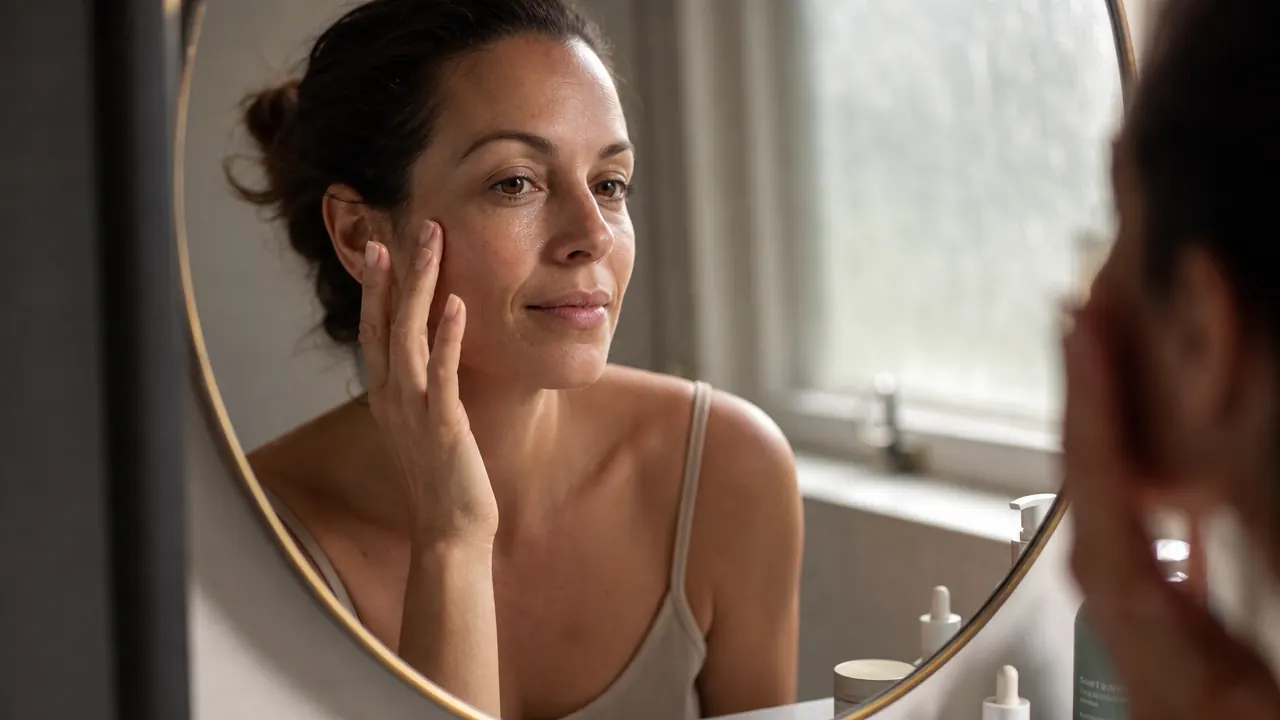
The first time I tried retinol I was 34. I bought a 0.5% formula from a brand that gets a lot of Reddit praise and followed every rule I knew: apply to dry skin, start twice a week, moisturize over it. By week two my chin was peeling in sheets. By week three I looked like I'd gotten a mild chemical burn. I stopped, blamed my sensitive skin, and told myself retinol just wasn't for me.
A year later I tried again with a lower concentration, 0.25%, from a different brand. Same story, slightly slower. The peeling started around week three this time, and it took out the corners of my nose and my jawline. I had a meeting I couldn't cancel and sat in it wearing more concealer than I'd worn in years. I quit again.
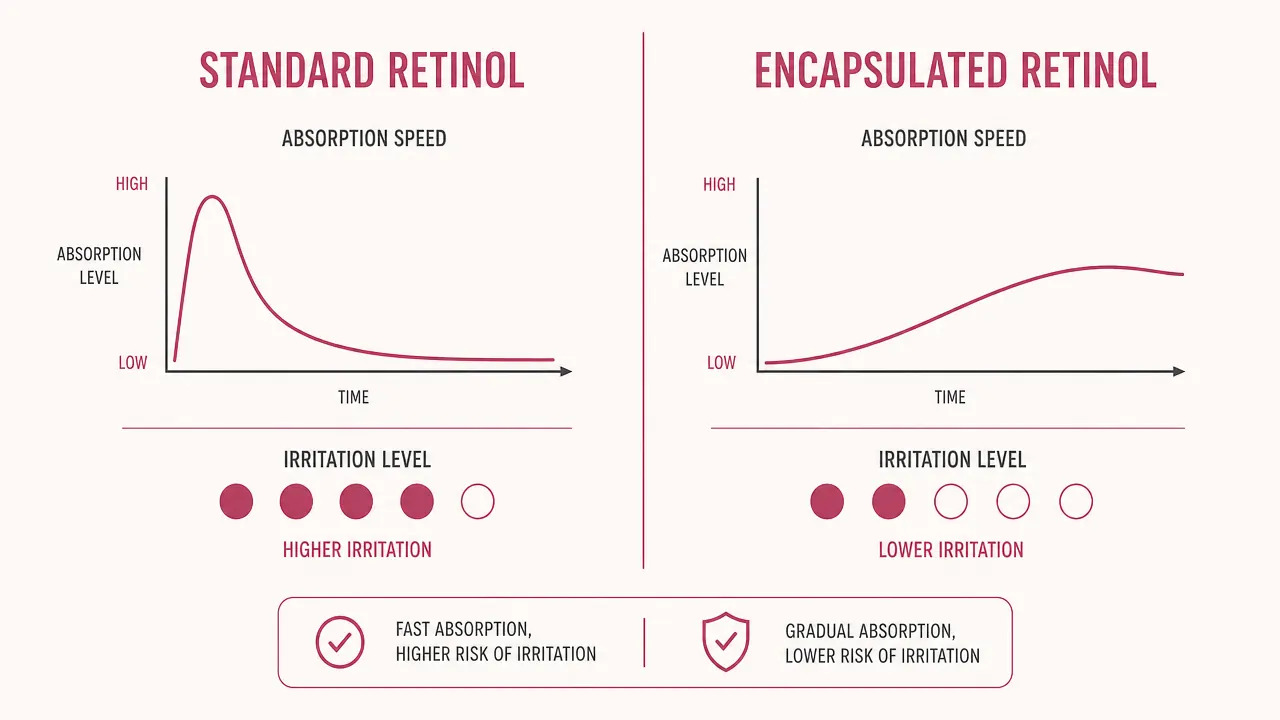
What I didn't understand then was that the irritation I kept experiencing wasn't purely about percentage. It was about how the retinol was delivered into my skin. Raw retinol, the kind in most serums, hits your skin cells all at once. If your barrier is already a little compromised, if you run dry in the cheeks and oily in the T-zone like I do, it overwhelms the tissue before it can do anything useful. The peeling isn't purging. It's your barrier breaking down.
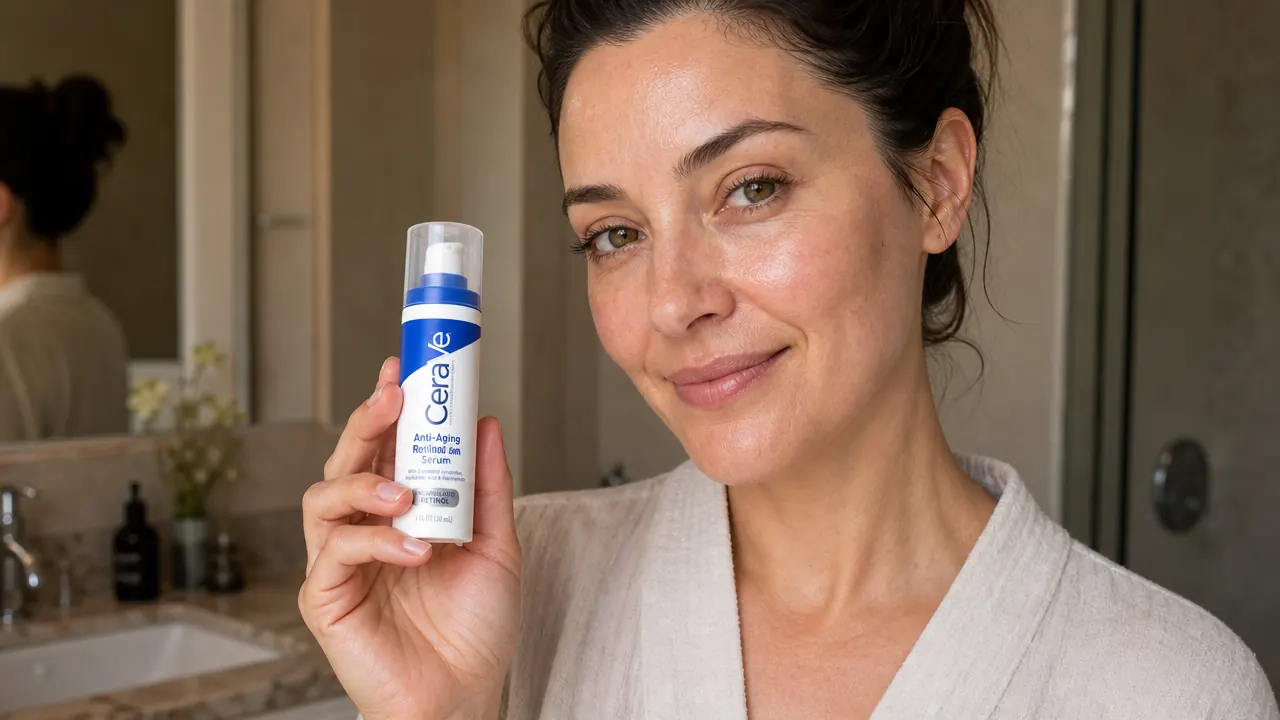
I learned this almost by accident. I was reading the ingredient panel on a box of CeraVe Anti Aging Retinol Serum at a drugstore, not because I planned to buy it, but because I was killing time. The label said encapsulated retinol. I stood there in the skincare aisle for probably four minutes reading about what that actually means. The retinol is sealed inside a micro-capsule that releases slowly after application, at a rate your skin can process. Combined with the ceramides, hyaluronic acid, and niacinamide already in the formula, the barrier is getting reinforced at the same time the retinol is working. I put it in my basket mostly out of curiosity.
I started with every third night, which felt almost too cautious after reading about it. But my skin had been burned twice and I wasn't rushing. The first two weeks were unremarkable. No peeling. No tightness. No flaking at the corners of my mouth. I remember checking my face expecting to find something wrong and finding nothing.
By week six I noticed my skin looked calmer overall. The texture along my cheeks was smoother. The small creases I'd started watching near my eyes were less defined. Nothing dramatic, and I want to be clear about that. Retinol takes months before the collagen changes become visible. But the baseline inflammation I always carried seemed to quiet down, which I wasn't expecting at all.
Two failed attempts taught me the ingredient isn't the whole story. The delivery system is half of it. CeraVe's encapsulated retinol is the first version that let me actually stay on it.
If retinol has destroyed your skin before, the formula you tried might be the reason.
CeraVe's encapsulated retinol releases slowly into the skin and pairs with ceramides and niacinamide to support the barrier while the active works. It's currently rated 4.6 stars across more than 27,000 reviews.
Amazon Check Today's Price on Amazon →I'm now at four months. I use it three nights a week, sometimes four. My skin hasn't rebelled once. I've had a few hormonal breakouts in that time because I have breakout-prone skin and that doesn't switch off, but none of them coincided with starting retinol and none were worse than my baseline. I stopped worrying about whether I was tolerating it and started just using it.
There are real cons. The bottle is small, one fluid ounce, and if you're applying to your neck and chest as well as your face it goes faster than you expect. A few people with very oily skin say the serum's texture feels slightly heavy, though I haven't found that on my combo skin. And at four months I'm only beginning to see meaningful texture change. If you want visible results in six weeks, retinol in general will disappoint you, and this one isn't an exception to that rule.

What I'll say is this: the entry barrier is lower than any retinol I've tried. The irritation I built up so much fear around didn't happen. That let me actually stay on it long enough to reach the point where retinol starts doing what retinol is supposed to do. Getting through month one without peeling was the whole problem I needed solved. CeraVe's formula solved it.
If you want the deeper breakdown, including how I layered it with the rest of my routine and the specific week-by-week changes I tracked, I wrote a full six-month review at the link below. If you've never tried retinol before and you're worried about where to start, I also have a guide on the slow-ramp protocol that makes the first month much less likely to go sideways.
What I'd Tell You If We Were Sitting at My Kitchen Table
If you've already tried retinol and quit because it destroyed your skin, I'd ask you one question before you write it off for good: was it encapsulated, or was it raw retinol in an oil or cream base? Because those are genuinely different experiences on sensitive and combo skin. Raw retinol at 0.5% on a compromised barrier is a lot. Encapsulated retinol in a ceramide base at any percentage is a different thing entirely. The ingredient is the same. The delivery is not. That distinction made retinol something I can actually use, and it might do the same for you. This isn't the most exciting skincare advice. It's just the thing I wish someone had told me three years ago before I spent money on two bottles I couldn't finish.
CeraVe Retinol is one of the more accessible entry points for anyone who's struggled with irritation from other retinols.
Encapsulated delivery, ceramide and niacinamide support, fragrance-free. Budget-friendly for one ounce. Check the current price and availability on Amazon.
Amazon Check Today's Price on Amazon →