
I have a rule before I buy any moisturizer that costs more than twelve dollars: I read the ingredient list top to bottom before I read a single review. Not because I distrust reviewers, but because a 4.8-star rating tells you the product feels nice. The ingredient list tells you whether there is a chemical reason it should feel nice, or whether you are paying for elegant packaging and good marketing. When La Roche-Posay Toleriane Double Repair kept appearing on dermatologist recommendation lists, I pulled up the full INCI panel before I ordered it.
What I found was more interesting than I expected. The formula is genuinely thoughtful in some areas and deliberately minimal in others, and the 'clinically tested, dermatologist recommended' badge on the front means less than what is written on the back. This review covers what the ingredient list actually says, what is absent from it on purpose, the two skin types that will get the most out of it, and the one formulation gap that nobody in the marketing copy mentions.
The Quick Verdict
A well-formulated, evidence-backed barrier moisturizer. The ceramide blend and niacinamide combination are legitimate. The fragrance-free commitment is real, not just label-speak. The main honest caveat: it under-delivers for dry skin in cold weather and the niacinamide dose is too low to treat existing hyperpigmentation.
Amazon Check Today's Price →If you want a moisturizer where every active ingredient has a reason to be there, this one passes that test.
La Roche-Posay Toleriane Double Repair earns its dermatologist recommendation through formulation, not just branding. Ceramides, niacinamide, and thermal spring water in a fragrance-free base. Nearly 50,000 Amazon reviews at 4.6 stars.
Amazon Check Today's Price on Amazon →What 'Clinically Tested' Actually Means (And Does Not Mean)
I want to start here because it trips people up. 'Clinically tested' is one of the least regulated claims in skincare. It means the brand ran some kind of study on some number of people and measured something. It does not mean the product was compared against a placebo in a double-blind randomized controlled trial. It does not specify what was measured, how many subjects participated, what the inclusion criteria were, or who funded the research. It is marketing language that sounds scientific without committing to scientific standards.
La Roche-Posay does publish studies on its thermal spring water and has done more rigorous clinical work than most mass-market skincare brands. But the 'clinically tested' claim on Toleriane packaging is not pointing to that work specifically. The reason to trust this moisturizer is not the badge. It is the ingredient list.
Unpacking the Ingredient Panel From the Top Down
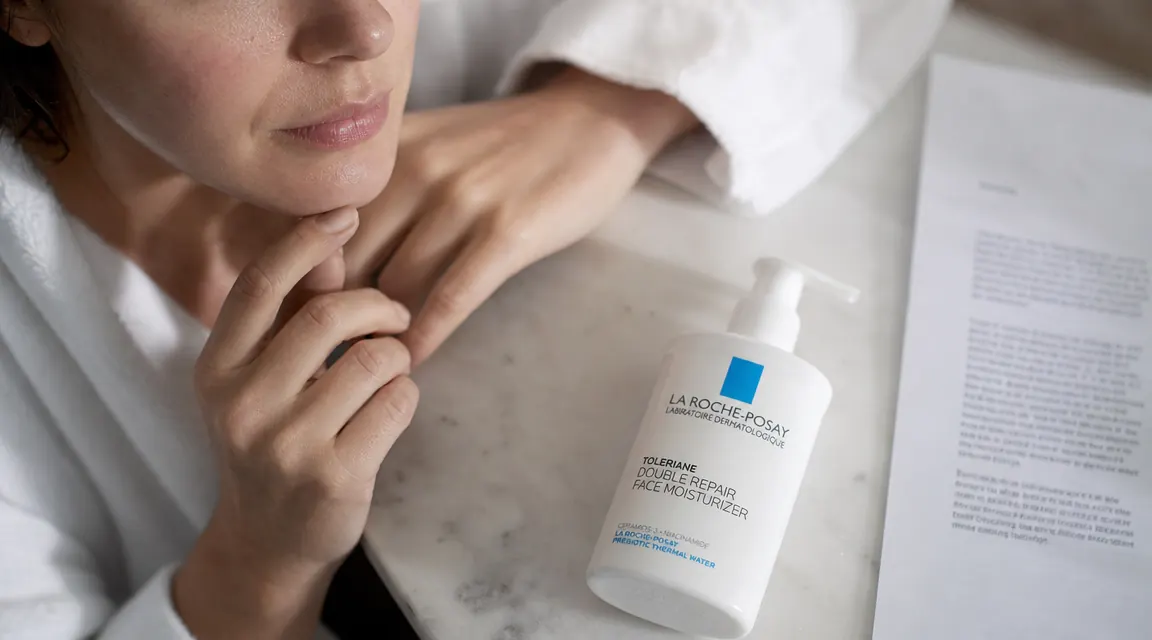
The base of Toleriane Double Repair is La Roche-Posay Thermal Spring Water, which is not just a marketing addition. The brand's thermal water is sourced from a single spring in La Roche-Posay, France, and contains selenium, a trace mineral with documented antioxidant and skin-calming properties. It has a neutral pH and low mineral content that does not irritate sensitized skin. Using it as the aqueous base rather than plain purified water is a real formulation choice, not a cosmetic one.
Next come glycerin and a mild emulsifier blend. Glycerin is one of the most well-studied humectants in dermatology, pulling water from the environment and the dermis into the stratum corneum. It works well on intact and compromised skin alike. The emulsifier system in Toleriane is notably clean by drugstore standards. Many budget moisturizers use sodium lauryl sulfate-adjacent emulsifiers that are effective but cause contact irritation in sensitized skin. LRP chose a gentler pathway.
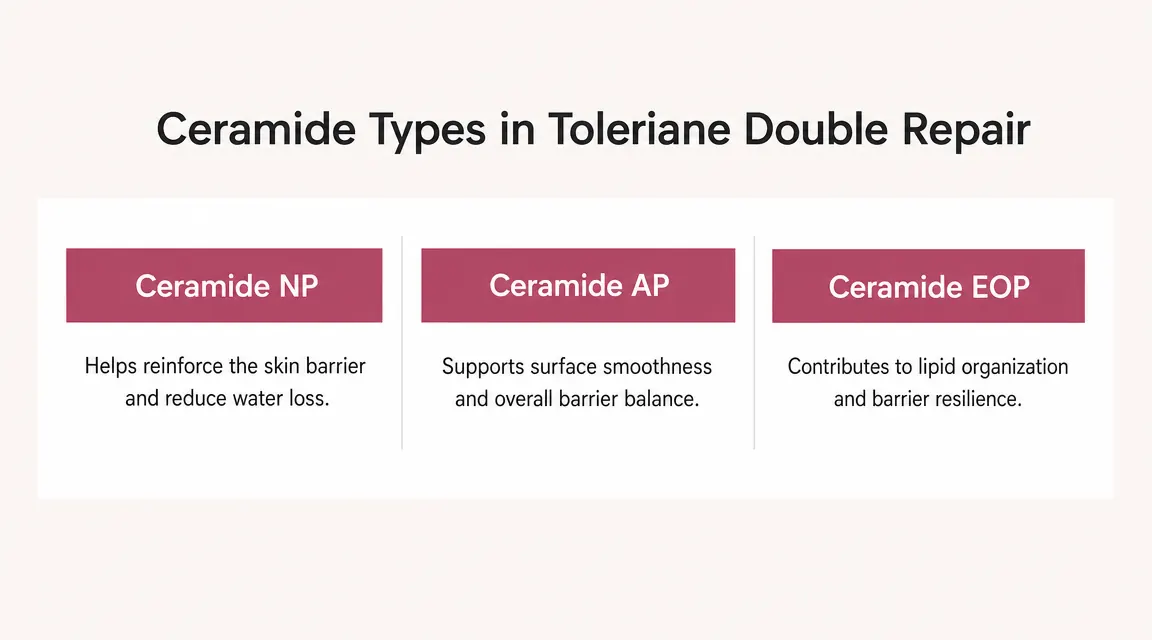
Then the ceramides: the formula contains ceramide NP, ceramide AP, and ceramide EOP. These are the three major ceramide fractions found in the human stratum corneum. Ceramide NP is the most abundant in healthy skin and plays the largest role in moisture retention. Ceramide AP and EOP contribute to the intercellular lipid bilayer that functions as the physical barrier against environmental irritants and water loss. Including all three fractions is a meaningful distinction from products that list a single ceramide and call it a day.
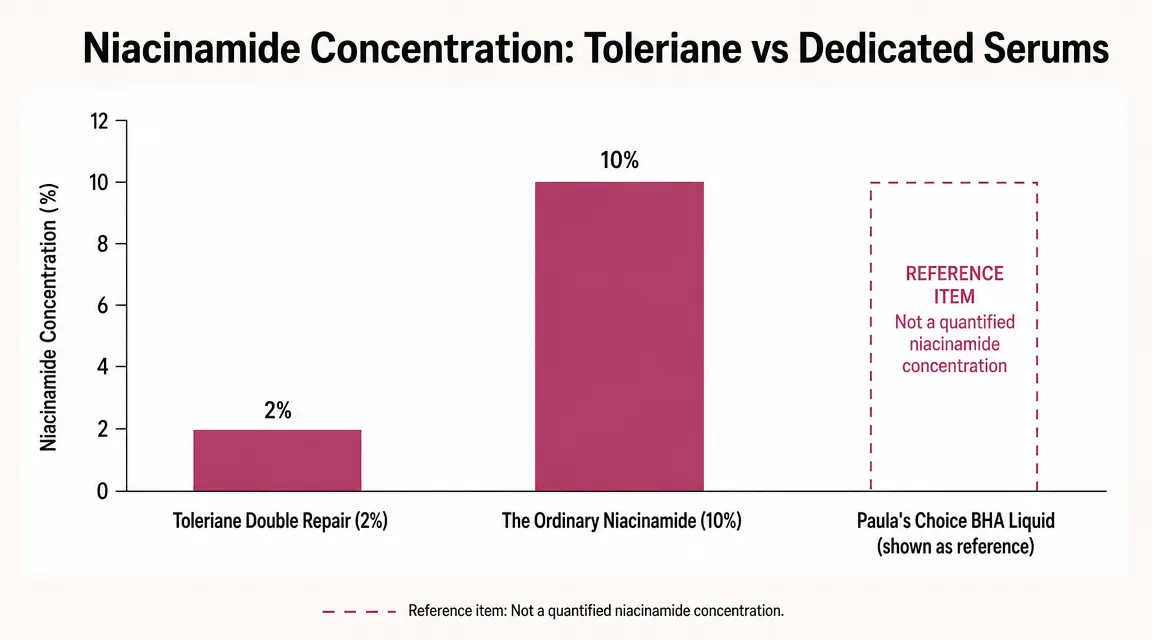
Niacinamide appears at a reported 2% concentration. I want to spend a moment on what that number means. Clinical evidence for niacinamide's effect on sebum regulation and pore appearance was demonstrated at 2-5% concentrations. Fading hyperpigmentation requires 5% and typically shows results after 8-12 weeks. Anti-inflammatory benefits appear even at lower doses. So 2% is genuinely useful for redness reduction and barrier support, but if you bought this expecting visible change in pore size or dark spots, the concentration is not high enough to deliver that. For that, you want a dedicated niacinamide serum layered underneath.
What Is Conspicuously Absent from the Formula
Fragrance. Absolutely none. Not 'fragrance-free' in the way some products use that phrasing while still including masking perfumes labeled as 'parfum' or 'aroma.' I cross-referenced the full INCI list and every ingredient present has a functional reason to be there. This is not a given at this price point. Some popular moisturizers in a similar category still include low-level fragrance components that perform acceptably for normal skin but cause contact sensitization in reactive or rosacea-prone skin over time.
There are also no alcohol denat, no witch hazel, no essential oils, and no botanical extracts that commonly trigger reactions in sensitized skin. The formulator made a consistent series of inclusion decisions and exclusion decisions that point toward the same customer: someone whose skin reacts to things easily, and who needs a moisturizer that will not add any new variables to their skin's chemistry.
What is legitimately missing from a formulation standpoint: fatty acids. A repaired skin barrier requires ceramides, cholesterol, and fatty acids in roughly equal proportions. Toleriane covers ceramides well and includes some cholesterol-adjacent lipids, but linoleic acid, a key fatty acid for barrier repair, does not appear in meaningful concentration. This is not a disqualifying flaw. Most leave-on moisturizers do not include fatty acids explicitly. But it does mean the formula is not a complete barrier-repair system on its own, which is relevant context for people with severely compromised skin.
Using thermal spring water as the base instead of purified water is a real formulation decision. The selenium content and neutral pH are not marketing additions. They are the reason reactive skin tolerates this immediately when other products sting.
How It Performed on My Combination Skin Over Eight Weeks
I came to Toleriane Double Repair not in a post-barrier-damage scenario, but as a healthy-barrier test. My skin in the test period was at baseline: combination, breakout-prone around the jaw and chin, dehydrated across the cheeks even in summer, not reactive. I wanted to assess whether this formula has value outside the 'emergency repair' use case it is most often recommended for.
The answer is yes, with qualifications. In warmer months, two pumps on clean damp skin absorbed in about 30 seconds, left no residue, and provided comfortable hydration through a full workday under SPF 50 and light foundation. My T-zone did not become more oily than usual. The niacinamide at 2% was not enough to make a visible dent in my jawline hyperpigmentation over eight weeks, which tracks with the concentration data.
The texture is genuinely light. Lighter than CeraVe Moisturizing Cream, which is the comparison I hear most often. That is a positive for my combo skin in spring and summer and a meaningful limitation in fall and winter. When the air got drier, I started needing a second moisturizer layer or an oil underneath to feel adequately occluded. If you are using this in a cold or low-humidity climate, budget for a heavier layer on top.
The Prebiotic Technology Claim: Worth Noting
La Roche-Posay added what they call 'prebiotic thermal spring water technology' to this formula, and I want to address this directly rather than leaving it as vague marketing language. The claim is that specific mineral compounds in the thermal spring water support the skin microbiome by providing an environment more favorable to beneficial bacterial strains. The supporting evidence for skin-microbiome intervention via topical prebiotics is early-stage but not fabricated. Research has linked a balanced skin microbiome to reduced rosacea flares, fewer acne breakouts, and more stable barrier function. The practical translation is modest: this is unlikely to be the main mechanism you will notice from this moisturizer, but it is also not a meaningless addition.
What is more meaningful in practice: the formula is not disrupting the skin microbiome the way products with antimicrobial preservatives, high fragrance loads, or drying surfactants can. A moisturizer that does not harm the microbiome is probably more valuable than one making aggressive claims about improving it.
Comparing This to the Other Ceramide Moisturizers I Have Tested
I have used CeraVe Moisturizing Cream, CeraVe PM Facial Moisturizing Lotion, Eucerin Original Healing Cream, and Vanicream Moisturizing Skin Cream as direct comparisons. Each serves a slightly different population. CeraVe Moisturizing Cream has a more complete lipid profile and is heavier, making it better for dry skin but more likely to cause congestion on oily or combination skin. CeraVe PM Lotion is a closer texture match to Toleriane but contains niacinamide at a higher concentration alongside hyaluronic acid. Eucerin is petrolatum-based, which is more occlusive but not oil-free. Vanicream is the most stripped-back option and appropriate for true contact allergy cases.
Toleriane Double Repair sits in a specific gap between CeraVe PM and CeraVe Moisturizing Cream. It is lighter than the cream, cleaner than the PM lotion from an ingredient-simplicity standpoint, and has the distinct thermal spring water base that the CeraVe products do not. For sensitized or post-procedure skin, I think that gap is meaningful. For everyday combination skin maintenance, CeraVe PM is worth comparing directly before you commit. For a full side-by-side ingredient analysis, see the La Roche-Posay Toleriane vs CeraVe Moisturizing Cream comparison.
The One Thing Reviewers Almost Never Mention
Nearly 50,000 Amazon reviews and I have read through a meaningful sample of them. The vast majority are positive and describe the texture, immediate calming effect, and compatibility with sensitive skin. What almost no reviewer addresses: the pump mechanism dispenses about 1.1mL per press, which means two pumps for a full face delivers roughly 2.2mL per application. At two applications per day, the 75mL bottle lasts approximately 17 days for a full face and neck protocol. That changes the price-per-use calculation relative to what you expect when you see the bottle size.
This is not a dealbreaker. The price per day is still reasonable, especially compared to prescription alternatives or medical-grade moisturizers. But understanding the actual use rate helps you set realistic expectations about how frequently you will be reordering, which matters if you are using this as a daily staple rather than a short-term repair protocol.
What I Liked
- All three major ceramide fractions present, matching the stratum corneum's actual lipid composition
- Genuinely fragrance-free with no masking compounds or botanical allergens
- Thermal spring water base with selenium content, not just filtered water with marketing language
- Niacinamide at 2% is appropriate for reactive skin and delivers real anti-inflammatory benefits
- Oil-free formula suitable for oily and combination skin types without congestion
- Clean emulsifier system avoids the contact irritants common in lower-cost moisturizers
- Prebiotic positioning has early evidence behind it, even if the effect is modest
Where It Falls Short
- Niacinamide at 2% is too low to meaningfully treat hyperpigmentation or enlarged pores
- No fatty acid component, meaning it does not address the full ceramide-cholesterol-fatty acid lipid trio
- Too light for dry skin in cold or low-humidity climates, needs a heavier second layer
- Pump delivers approximately 17 days of twice-daily use per bottle, higher cost-per-use than volume implies
- No locking pump mechanism for travel
- Price per ounce is higher than CeraVe Moisturizing Cream for a partially overlapping formula
Who This Is For
Toleriane Double Repair is purpose-built for three skin types: sensitized or reactive skin that needs a low-risk, low-ingredient baseline moisturizer; combination-to-oily skin looking for a ceramide product without the heaviness of a cream; and anyone post-procedure, post-reaction, or post-overly-aggressive-routine who needs a formula that will absolutely not add variables to an already-inflamed system. The fragrance-free, alcohol-free, essential-oil-free commitment makes it one of the safer bets in this category for people who have reacted to other moisturizers. If your skin tolerates most things, this is a good formula. If your skin reacts to most things, this is probably a better formula. For the complete barrier-rebuilding protocol this moisturizer fits into, see how to rebuild a damaged skin barrier with ceramides.
Who Should Skip It
If your skin is dry rather than sensitive, this formula will likely leave you wanting more by mid-morning. The light lotion texture absorbs quickly, which is a feature for combination skin and a liability for skin that needs prolonged occlusivity to feel comfortable. People with very dry, flaky, or eczematous skin need heavier emollients and ideally a petrolatum-containing product to seal moisture in rather than just deliver it. You should also skip it if your primary goal is hyperpigmentation treatment. The 2% niacinamide will not fade existing dark spots in any noticeable timeframe. Layer a dedicated serum underneath and use this as the moisturizer on top rather than expecting it to serve both functions.
The ingredient list earned this product its reputation. The dermatologist badge did not.
Three ceramide fractions. Real fragrance-free commitment. Thermal spring water base with documented skin properties. La Roche-Posay Toleriane Double Repair is one of the few mass-market moisturizers where the formula justifies the recommendation. Check today's price on Amazon.
Amazon Check Today's Price on Amazon →