
Five months ago I almost did not buy it. The Ordinary Niacinamide 10% + Zinc 1% costs very little, which made me suspicious in the way that only people who have spent serious money on a single-ingredient serum can be suspicious. I have combo skin that runs oily through the T-zone and dehydrated everywhere else, with a reliable rotation of hormonal breakouts along my jaw and a set of pores on my nose that I have been trying to minimize since my mid-twenties. I had tried niacinamide before in other formulas, always as a supporting ingredient buried at position 15 on an ingredient list. The Ordinary puts it at the top in a 10% concentration, and I wanted to know whether that actually changed anything. So I bought two bottles, kept a photo log, and wrote down what I noticed week by week.
The short answer is yes, something changed. But the change was slower and more specific than the Amazon review averages suggest, and it came with a few tradeoffs I did not see mentioned in the top comments. This is the long version.
The Quick Verdict
Best-in-class sebum regulation at a price that makes every alternative embarrassing. Visible pore improvement takes 8 to 10 weeks; results are real but not dramatic. Pill-up risk with silicone moisturizers is a genuine inconvenience.
Amazon Check Today's Price →Your T-zone is still oily at noon because your barrier is dysregulated, not because you need more blotting paper.
The Ordinary Niacinamide 10% + Zinc 1% addresses sebum at the source. 56,000-plus Amazon reviews and a 4.7-star rating. Currently budget-priced.
Amazon Check Today's Price on Amazon →How I Used It: The Five-Month Protocol
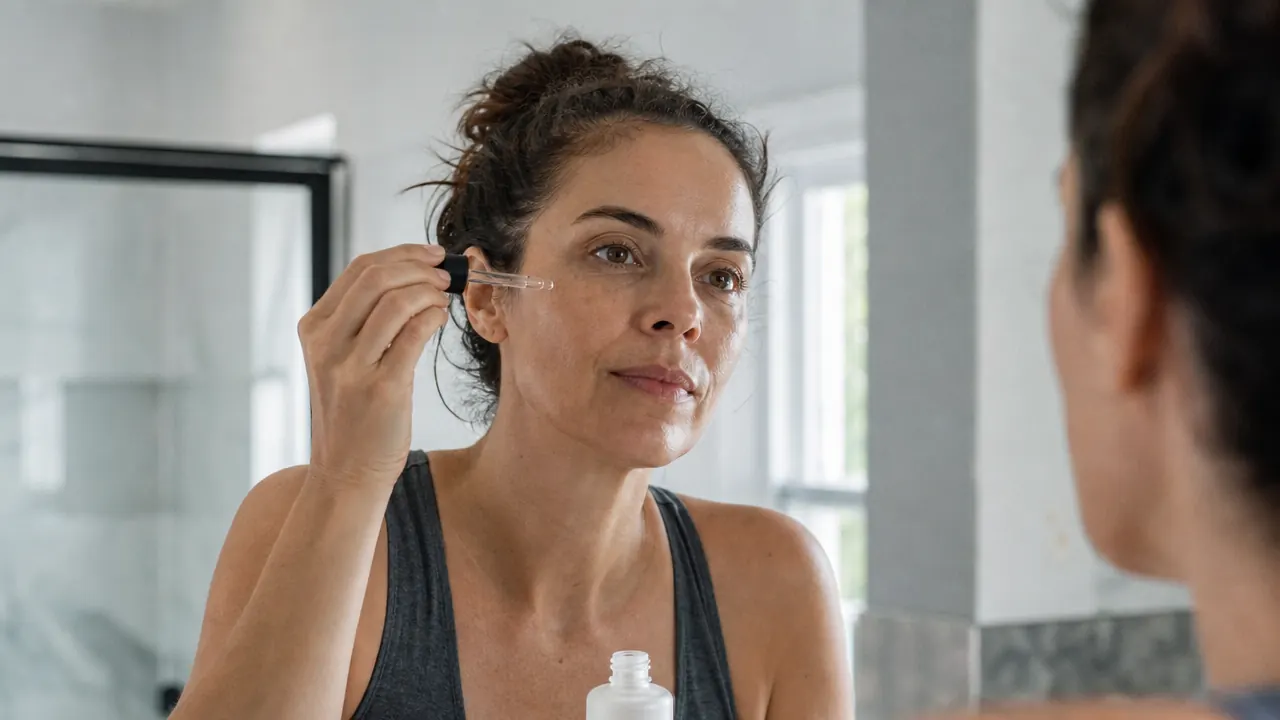
I applied the serum every morning, seven days a week, starting in late December. Routine context matters here: I cleanse with a gentle low-pH foaming cleanser, pat dry, then apply the niacinamide while my skin is still slightly damp. I follow with a fragrance-free moisturizer and SPF. No actives layered on top of the niacinamide in the morning. On alternate evenings I use a low-strength retinoid and skip the niacinamide entirely. I did not change anything else in my routine during the five months so the variable was isolated.
I took photos in the same position, same lighting, every two weeks. I tracked three things: visible pore size on my nose and cheeks, midday oil breakthrough (how shiny I was by 1pm), and new blemish count per two-week period. These are blunt instruments, not clinical measures, but they are honest ones.
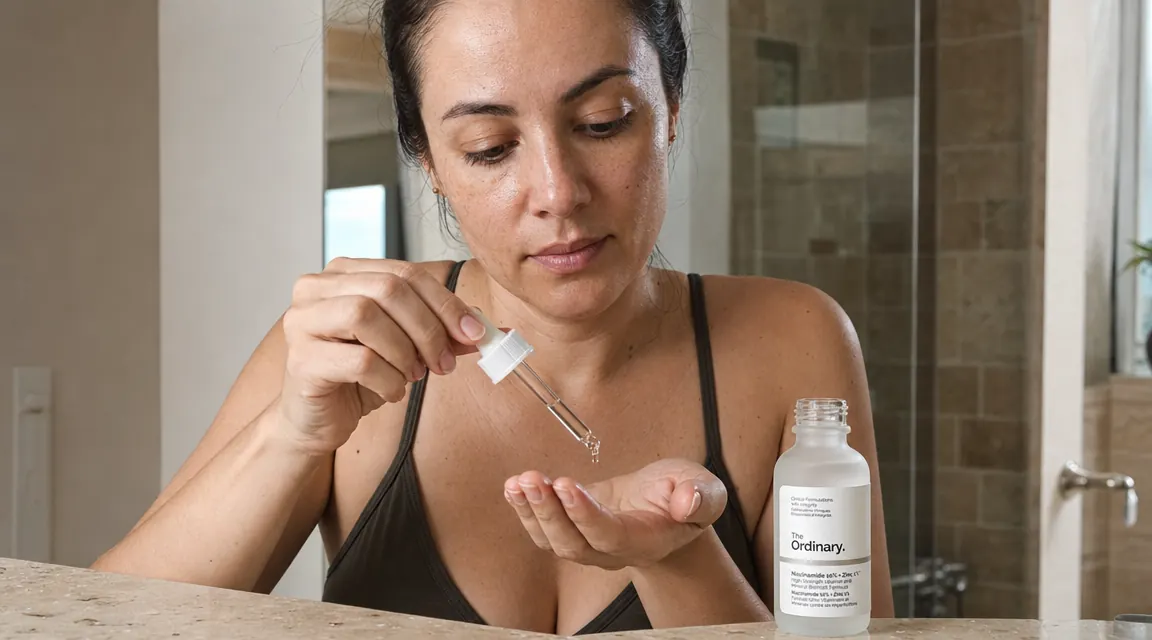
The dropper dispenses cleanly. Two drops is enough for face and neck. It layers under moisturizer without sliding or balling up, as long as you are not using a heavy silicone-based moisturizer immediately after, more on that in a moment.
What the 10% Niacinamide Concentration Actually Does
Niacinamide is vitamin B3 in its amide form. At concentrations of 2 to 5%, published research shows meaningful reductions in sebum excretion rate, improvements in skin tone evenness, and some anti-inflammatory effect on existing blemishes. At 10%, the sebum-regulation data gets stronger, and there is additional support for reducing the appearance of enlarged pores over a 12-week period. The Ordinary uses 10%, which puts it at the upper end of what you find in widely sold products.
The zinc is in there at 1% as zinc PCA, a form with mild sebostatic and antimicrobial properties. It is not the starring ingredient but it is not a throwaway either. Zinc PCA specifically has been studied for acne-prone skin because it reduces the adherence of Cutibacterium acnes to the follicle wall. Combined with niacinamide's effect on sebum viscosity, the logic of the formula holds together.
The rest of the formula is short: water, niacinamide, zinc PCA, tamarind seed extract, and a preservative system. No fragrance, no silicones, no alcohol. This formula has an extremely low irritation floor, which is part of why it tolerates pairing with most other actives.
The Results, Month by Month
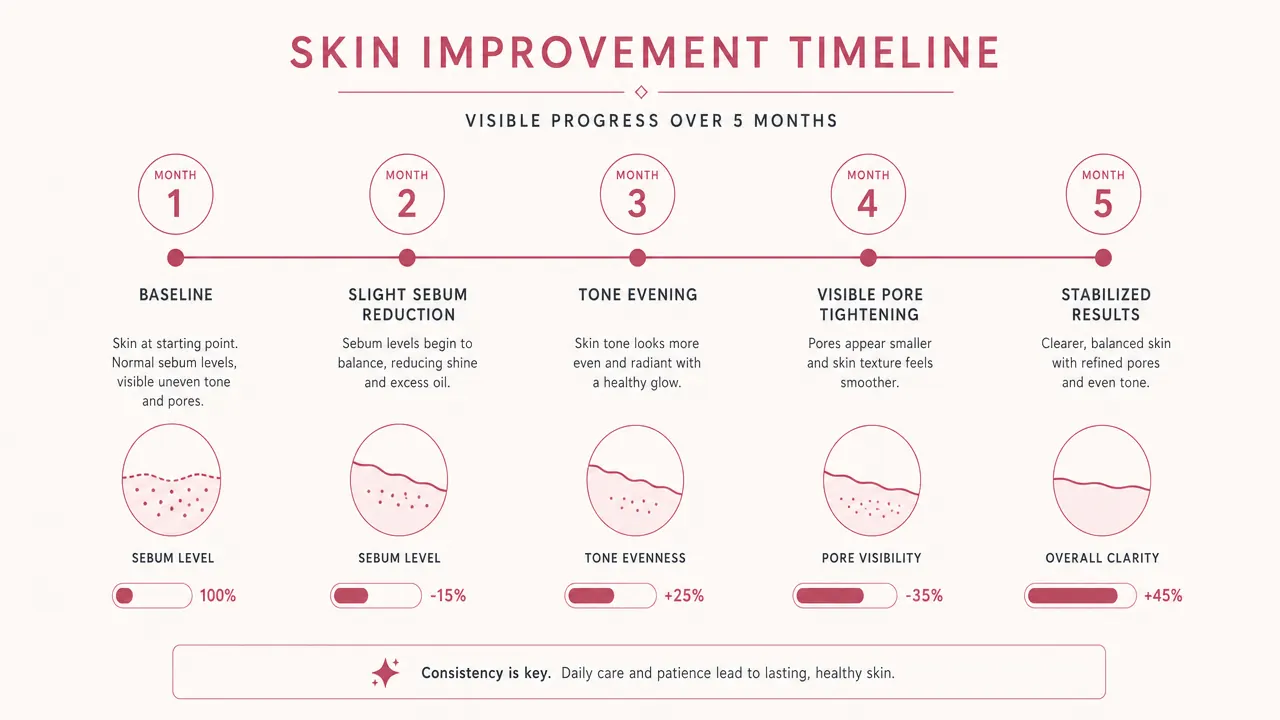
Weeks one through four were almost unremarkable. My skin did not purge, which I had half-expected because some people report initial breakouts when starting niacinamide at high concentrations. Nothing. No tingling, no new blemishes tied to the serum, no unusual dryness. The midday oil check was still happening at around 12:30. I wondered if I had bought something inert.
By week six I noticed the first real signal: my T-zone was producing less oil by early afternoon. Not dramatically less, but measurably. I was reaching for blotting film about 90 minutes later than I had been. My nose felt less congested after cleansing, like something had shifted slightly in texture. The new blemish count in my two-week tracking window dropped from an average of four to two.
Month three is where the pore story gets interesting. The photos showed a visible reduction in the appearance of my nose pores, most obvious in cross-lighting. The pores had not shrunk physically, pore size is largely determined by genetics and skin elasticity, and nothing topical permanently changes the structure. What changed was the filling. When sebum and dead cell debris are not constantly backing up in the pore opening, the pore looks smaller. That is what niacinamide at 10% appears to do over consistent use. It is the right claim to make; it just takes longer than most people expect.
The pores had not shrunk in any structural sense. What changed was the filling. A cleaner pore looks like a smaller pore, and that is a fair thing to promise, it just takes ten to twelve weeks to show up.
Month four and five were maintenance. Results had stabilized. I did not see further dramatic improvement, but I also did not see backsliding. Breakout frequency held lower. Midday oil was noticeably more controlled than my pre-niacinamide baseline. Skin tone was more even, though I credit this partly to the retinoid I use at night and not entirely to the niacinamide.
The Pill-Up Problem (and How to Avoid It)
This is the complaint I see buried in the negative reviews, and it is real. If you apply The Ordinary Niacinamide over certain moisturizers or under certain sunscreens, it pills. It balls up on your face into tiny gray flakes that look terrible and take five minutes to pick off. The texture comes from the tamarind seed polysaccharide in the formula, which does not play well with silicone-heavy moisturizers applied on top of it.
The fix is layering order and product selection. Apply the niacinamide serum first, directly after cleansing. Wait 60 seconds for it to absorb. Then use a moisturizer that is not silicone-heavy. I switched to a simple ceramide moisturizer during this test and the pilling disappeared entirely. If your current moisturizer has dimethicone or cyclopentasiloxane in the top five ingredients, expect friction. This is not a flaw in the niacinamide specifically; it is a chemistry incompatibility that is easy to route around once you know about it.
What It Did Not Fix
Niacinamide is not a BHA. It does not exfoliate inside the pore channel, so it will not clear a deep blackhead or dissolve the oxidized sebum plug that has been sitting in your nose since you were 22. It regulates how much sebum is produced; it does not chemically lift out existing congestion. If you have significant blackhead buildup, you still need something exfoliating, a low-percentage salicylic acid toner used two or three nights a week, for instance. I use Paula's Choice BHA Exfoliant on those nights and consider it a different tool.
It also did not do anything visible for my fine lines. Niacinamide has a weak effect on dermal collagen via ceramide synthesis, but it is not a retinoid and should not be positioned as one. My under-eye area looked the same in month five as in month one. If fine lines are your primary concern, niacinamide should be supporting your retinoid, not replacing it.
Finally, it did not help much with hormonal breakouts while they were actively forming. Once a breakout was underway along my jaw, the serum did not speed up resolution noticeably. Where it helped was in the number of new breakouts starting, not in the healing speed of ones already in progress.
Ingredient Transparency: What Makes This Formula Worth Trusting
The Ordinary's entire brand is built on publishing the concentration of every active and selling the formula, not the packaging. The full ingredient list on this serum is nine items long. Compare that to any competitor charging premium prices for a niacinamide serum and you will often find the same active at an undisclosed percentage, surrounded by fillers and fragrance that justify the price point but do not improve the outcome.
At 10%, this formula delivers a clinical-range dose of niacinamide. The cost per dose is genuinely absurd. I have used the serum daily for five months across two bottles and spent very little. Most of the branded alternatives I compared it against would have cost several times more for the same volume.
What I Liked
- True 10% niacinamide concentration, not buried at position 12 on the list
- Zinc PCA adds mild antimicrobial benefit for breakout-prone skin
- Measurable sebum reduction visible within 6 to 8 weeks of consistent use
- Visible pore appearance improvement at the 10 to 12 week mark
- Fragrance-free, alcohol-free, silicone-free formula with low irritation risk
- Layers well with most actives including retinoids, azelaic acid, and vitamin C
- Price per bottle makes double-bottling or gifting a non-decision
Where It Falls Short
- Pore improvement takes 10 to 12 weeks and requires daily use to maintain
- Does not exfoliate or clear existing blackheads, needs a BHA alongside it
- Pills with silicone-heavy moisturizers if layering order is wrong
- Provides no meaningful benefit for fine lines or wrinkles
- Dropper bottle means accidental over-dispensing until you learn the pressure
Who This Is For
This serum is built for anyone with oily, combo, or blemish-prone skin who wants to address the sebum problem at its source rather than managing the symptoms with blotting film and mattifying powder. It rewards patience and consistent layering. If you are willing to use it daily for at least two full months before evaluating it, you will almost certainly see a measurable difference in how oily your skin runs by midday and how frequently you break out. It is also an excellent supporting ingredient if you already have a retinoid in your rotation, because niacinamide's barrier-supportive properties help offset some of the initial dryness retinoids cause.
Who Should Skip It
Skip this if your primary concern is fine lines or hyperpigmentation. Niacinamide contributes marginally to both, but you need a retinoid and a vitamin C serum more than you need niacinamide for those goals. Also skip it if your skin runs very dry and dehydrated without much oil, the sebum-regulating mechanism has less to work on and you may find the texture drying rather than balancing. Mature skin types with no oiliness concern will get little out of this specific formula. And if you break out from every new product within 48 hours, run a patch test behind your ear first, even though the ingredient list is about as clean as it gets.
If you want to understand how niacinamide works alongside a BHA exfoliant for pore clearing, I compared those two tools directly in my breakdown of The Ordinary Niacinamide vs Paula's Choice BHA. And if you want the tactical application protocol, including layering order and timing, the how-to guide on controlling oily skin with niacinamide covers the full routine.
Five months of daily use. Two bottles. Minimal total cost. The sebum control is real and the pore change is visible by week ten.
The Ordinary Niacinamide 10% + Zinc 1% is one of the few skincare products where the formula does exactly what the label claims and the price makes trying it a no-risk decision. Check the current price on Amazon before the listing changes.
Amazon Check Today's Price on Amazon →